Showing posts with label McDonald's. Show all posts

Thursday, 10 September 2015

How on earth do I quit eating junk food?

A friend of mine asked me this question this morning, so I decided to talk about this on my post this week.

The first answer to this question that springs to mind is simply that the Fast Food Industry DOESN'T WANT YOU TO!

However, I believe there is a different answer to that one...

There are strategies...  Mindfulness has a lot to do with it, good habits over bad and of course... willpower (in some cases).

Lots of people say, "I have no willpower!"  Well, that just isn't true.  When you want something badly enough you have all the will power in the world.

What to do when you want to make a major change in your life, be it giving up smoking, junk food or some other unhealthy habit:

Step 1:  Sit down with a piece of paper and a pen and preferably in silence when no one is going to interrupt you.  Ask yourself a series of questions.  The first and most important one is:
Have you ever given up a major habit before, such as smoking?
If you have then you have to believe that if you can give up smoking you can certainly give up junk
food.

Ask your self WHY you want to stop eating junk food?  Do you want to give up to improve your diet?  To lose weight?  To improve your health?  Do you want to be a good example for your children?

Here are some thoughts to consider.  Most people know by now that junk food isn't healthy.  So you would be wise to start looking at junk food for what it is.

Junk food isn't food.  Junk food is processed leftover food stuffs that weren't good enough for "proper" food.  This is churned up and mixed with huge amounts of salt and sugar to make it taste good and last longer on the supermarket shelf or in the restaurant store room.

For example; McDonald's fries have a staggering 14 ingredients!  Yes!  And let's not forget the pink slime scandal which they "say" has been removed from burgers.

There have been "tests" by people who have bought a Happy Meal from McDonald's and left it untouched on a shelf for a year to see what would happen... the results were astounding... the meal looked exactly the same as when bought - just dried out... no mould... no foul smell...

So just think what that must be doing to your body on a regular basis.  Junk food is so unhealthy it can even re-wire your brain, eating junk food on a regular basis can literally kill off your desire to eat a healthy diet.

This is what makes it so difficult to give up.  But all is not lost, you can train your brain to prefer a healthy diet.
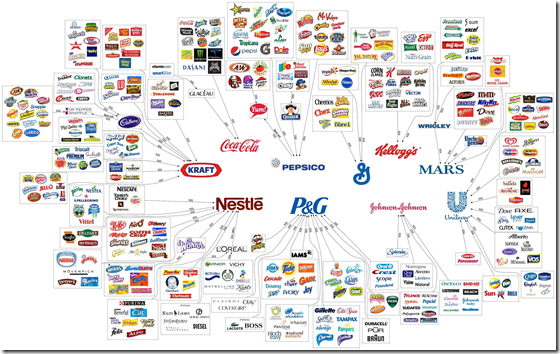
You are not in control of your diet.  Food manufacturers are.  The huge food manufacturers are in it for the profits.  They will put anything in their food to get you hooked and keep you coming back for more.  Sugar and Salt are major players as they not only make food more palatable but they also extend it's shelf life in the supermarket.  Sugar and salt get you hooked on the taste and that registers in the brain and the next time you see your favorite packet of cookies in the supermarket your brain will send you a message saying:
Remember those?  Remember how good they were?
And bam!  Next thing you know your at the check out with the packet in your basket.

We are all bombarded on a daily basis with advertisements for processed foods and junk food.  This is why it's far easier to stay off the cigarettes once you quit... there's no advertising for cigarettes.

Step 2: Plan healthy meals.  Plan and cook healthy meals from scratch.  And, when you eat them, think about all the great things that meal is doing for your body and mind.  How the ingredients will help you to be healthy, how they will repair damaged areas, how they will give you energy and feed brain cells.... be CONSCIOUS of what you are putting into your mouth.

Sugar is addictive and produces the same response in the brain as cocaine... Salt, well I don't know about it being addictive but we sure get used to the taste and the amount of salt in foods... Just try cooking dinner one evening and not adding any salt, things will certainly be bland.  However, we aren't born liking salt, it gets introduced to us from about 6 months on and then it just grows and grows...  However, if you reduce the amount of salt in meals gradually, your taste buds will adjust to the new levels of salt and you will need less.

Step 3:  Think before you shop before you eat.  Be mindful of what you are doing.  Plan meals ahead, go to the supermarket with a shopping list and do not stray from that list.  When you sit down to eat, look at the food in front of you and ask yourself; do I WANT to eat this?  Is it GOOD for me?  Will it NOURISH me?  If you can't answer yes to these three questions, then don't eat it.

Step 4:  You can either decide to quit and never go near a fast food restaurant ever again, or you can
decide that that type of meal should be a "treat", something sporadic that is not the norm.  That way it may be easier to abstain knowing that you are allowed to "indulge" every now and again - say once a month.

I have given up several things in life.  I gave up cigarettes, I gave up soft drinks, I gave up sugar in tea and coffee and then aspartame in tea and coffee.  It is possible to give up anything you choose.  However, you have to be convinced that that is what you want to do and what your reasons for doing it are.

To me it is simple.  If your health is or will be compromised by your habits then you need to change them.  To keep your health or even to improve it then willpower is the least of your problems.

Now, YOU have to be convinced.  You will not succeed if you are doing it because your husband, wife, mother, father, boyfriend, girlfriend says that is what you should do.  Do it for YOU, so you will live a long and healthy life to enjoy with your loved ones.

Only YOU are in control of what and how much you eat.

I can help you improve your health.  If you would like to make an appointment with me either in person or via Skype, just send me an email to lucycarr@socialnutrition.com

Thursday, 29 January 2015

The NOT so humble McDonald's fry...

What's in a fry?  You'd think that all there is in a fry is potato, the oil from frying and salt - to taste.  At least that's the way you make them at home.

Well McDonald's have found a way to put 14 ingredients into their fries!  Yes, I said 14 vs 3 at home.

The process for making McDonald's fries at their Idaho processing plant is as follows:

First the potatoes are harvested, peeled, cut and blanched.  After that fairly innocuous process they are put through a cutting machine that gives them their long, thin shape.

Once they have been shaped, they are "sauced" with a blend of canola oil, soybean oil, hydrogenated soybean oil, natural BEEF flavor, hydrolyzed wheat, hydrolyzed milk, citric acid and dimethylpolysiloxane.

Dimethyl what?????  Well, dimethylpolysiloxane is an additive that stops cooking oil from foaming - it is also a form of silicone found in Silly Putty.  According to McDonald's it is added for safety reasons.

Dextrose - a form of sugar - is then added to give the fries their golden color when fried.  Sodium acid pyrophosphate is then added to stop the fries from going grey and salt for flavoring.

They are fried at the plant and then flash frozen before being shipped to the McDonald's outlets.
 Once at the outlets they are fried for a second time in an oil blend similar to the one at the plant with the addition of - another unpronounceable name - tertiary butylhydroquinone (TBHQ) which is a petrol based chemical and hydrogenated soybean oil - a manufactured form of trans fat.

A single large serving of McDonald's fries contains 510 calories, 6g of protein, 24g of fat, 67g of carbs and 290 mgms of sodium.

So, these fries are NOT vegetarian/vegan or gluten free - they aren't even dairy free!

Now, you are a little luckier if you live in the UK as the McDonald's fries recipe in the UK does not include hydrogenated soybean oil, canola oil or dimethylpolysiloxane.

So next time you want fries - make them yourself!!!

I can help you improve your health.  If you would like to make an appointment with me either in person or via Skype, just send me an email to lucycarr@socialnutrition.com

Thursday, 23 January 2014

The Obesity Problem

It seems to me that there is lots in the news lately about obesity and sugar, but even though there is now more information than ever available to the public, the obesity epidemic isn't getting any better.

It's a fact that the developed world has a serious obesity problem, some call it an epidemic.  Obesity causes a whole host of health issues such as diabetes, heart disease, cancer, etc..  You've all heard me talk about this incessantly.

I was truly saddened to read an article this week about a survey carried out on 550 obese people by Nuffield Health in the UK.  The results say:

  • One in five obese adults would rather be fat than have to watch what they eat.
  • 17% admitted they have never tried to lose weight.
  • 48% are resigned to remaining obese because they lack the will power to diet.
  • A quarter of those surveyed said that they don't have time to exercise.
  • One in seven said they would rather risk their health by being over weight than to have to exercise.
The researchers also surveyed 3,100 British adults who were of varying weights:
  • 39% of people claim not to eat healthily  because it's too expensive.
  • 14% think they lack time to prepare a healthy meal.
  • 10% said they didn't know how to eat healthily.
  • 40% said that seeing obese people in their area of residence is a common occurrence.
  • 38% said childhood obesity is normal.
  • 43% want stricter regulations on "unhealthy" food and drink chains sponsoring high profile events.
  • 40% said school meals should be regulated.
  • 55% said the blame lies in the food industry.
So, who really is to blame for obesity?

The food industry:
Our food has changed beyond recognition in just a few decades.  Our grandparents ate meat, fruit, and vegetables - healthy home cooked meals produced from scratch.

Industrially produced "food" such as hot dogs, doughnuts, biscuits, hamburgers, etc., did not exist.  The problem with the industrialization of food is that it has stopped being food.  It is highly processed, and packed full of additives to give it a longer shelf life.  Even fruit and vegetables are picked early and shipped long distances reducing their nutrient quality and they are also covered in pesticides, and don't even get me started on GMO produce!  Meat and fish are farm produced and are fed on anything other than their natural food.  Cows are shot full of steroids and antibiotics to make them grow bigger quicker - the same happens with chickens.

We are constantly assaulted with advertising from major food corporations such as McDonald's, Pizza Hut, Burger King, KFC, Coca Cola, Pepsi Co. - where you can get a quick and easy "meal" for your hectic lifestyle.  Soft drinks are packed full of sugar and High Fructose Corn Syrup (HFC).   

I could go on and on about the food industry but this post would be too long and I'd probably bore you!

Medical Staff/ Government Bodies:
This is a tough one.  Lots of GPs are over worked and don't have the time to dedicate to people with a complicated problem such as obesity.  There is next to no help subsidized by the health service and surgery seems to be the main solution.  Bariatric surgery or gastric bands have many associated risks.

From what I read in the news, lots of people have found help through slimming groups such as Weight Watchers or Slimming World, but not everyone can afford to join.

So how about the National Health starting slimming groups - providing information on how to eat healthily and exercise and support for those in need.  A major factor for success in dieting is to have the emotional and psychological support.

Could governments do more to restrict the good giants and make them reduce things like sugar and salt content and advertising?  A new group, Action on Sugar, that I talked about last week has just been put into action to challenge the food giants.  I wish them luck, it is never too late to try and change things.

The individual:
Our bodies' digestive systems have not changed in 10,000 years.  It was not designed to eat refined, processed foods high in sugar.  HFC is so anti-natural that our bodies can't cope with it.  Lots of people don't realize that our bodies are not equipped to cope with anything other than natural foods: fruits, vegetables, meat, fish and poultry.

The human body was designed to live in a harsh world where food was scarce.  Our ancestors, the hunter-gatherers, lived mostly on what they could gather (fruit and vegetables) and what they could hunt.  And hunting was not an everyday occurrence.  These was no way of keeping food, so if they were lucky enough to catch an animal they had to eat it as quickly as possible before the meat went off.  They would then live off fruit and vegetables until they could catch another.  So, the human body, in those times, stored everything it got because it didn't know when it was going to get more food.

The body literally has not changed in this aspect.  It still stores everything as it still believes that it is living in an environment of scarce food and not in a world of abundance.

The fact that food abounds in all shapes, forms and flavors is literally killing us.  Our hunter-gatherer ancestors had to move a lot to catch their food, we have progressively become extremely sedentary.  We can even go to a drive-thru and not even have to even get out of the car to pick-up food.  Or we can have it delivered.

Obviously it is up to the individual as to WHAT they put in their body.  I really can't believe that people don't know about what is healthy and what isn't.  To me, it is obvious - but then I am a Clinical Nutritionist.

There are hundreds of excuses that people use to explain away their weight problem:
  • It's my genes.
  • I've tried every diet that exists and nothing works.
  • I lost weight and then put it all back on again.
  • I can't shift my baby weight.
  • I could comfort eat for England!
And so the excuses go on and on.

The simple truth is that diets don't work.  You may lose the weight initially but the minute you stop dieting it will come back - and then some.  Why?  The answer is simple, if the way you eat on a daily basis has made you fat, changing your diet and restricting certain foods will help you lose that weight.  However, the minute you go back to eating the way you did before you went on a diet, will just make you put all the weight back on again - just like it did the first time!

Any change in diet has to be a lifestyle change - forever, not just for a short period of time.

It really isn't rocket science.

So who do you think is to blame?

My opinion is that everyone is to blame.

The food industry for producing unhealthy food.
Medical staff and government bodies for allowing the food industry to do what ever it wants.
Humans... no one force feeds you.  You have a choice.  Eat healthy foods, there is loads of free information out there to tell you how.

My only worry is that healthy food seems to be too expensive for some people - that is a real problem.  When it's cheaper to buy a meal at McDonald's than it is to go to the supermarket and buy healthy food then there is a very real and worrying problem.

Social Nutrition:  You can make an appointment to improve your health with Social Nutrition either in person (Madrid) or online (Skype).  Just send an email to lucycarr@socialnutrition.com

Thursday, 19 September 2013

Just how long does it take to burn off the calories from that fast food lunch you just ate?

It is no news that the western world is eating it's self to death out of laziness.  Yes, I know that sounds harsh, but most blame it on lack of time and too much stress.  Yes, we are all stressed with work, homes, kids, schools, after school activities, etc..  So, grabbing a McDonald's for lunch or ordering a pizza for dinner is so quick and easy and it has become the norm.  Moms and Dads tend to take the easy option and avoid planning home cooked meals due to lack of time.

A new study from Texas has found that if information as to how much exercise you would need to do in order to burn off the fast food you just ate is given a long with the calorie information of that meal then the consumers tend to make healthier choices.  It is a plan that has been devised to "scare" people into eating better.

So how long does it take?

We all burn calories in different ways, an overweight person will always burn more than a normal weight person.  The exercise information (based on a 68kg person) should be as follows:
  • McDonald's Egg McMuffin - 300 calories - 32 minutes of running at 5mph
  • Starbucks Cinnamon Roll - 500 calories and 85 minutes of dancing - nonstop
  • Dunkin' Donuts Cholocalte Frosted Donut - 230 calories and 1 hour of walking at 3mph
  • Wendy's Large French Fries - 540 calories and 77 minutes of cycling at 10-12 mph
  • Taco Bell Beef Burrito Supreme - 410 calories and 70 minutes of dancing.
  • Domino's slice of medium cheese pizza - 210 calories PER SLICE and 22 minutes of cycling at 12-14mph for each slice you ate.
  • McDonald's Mighty Kids Meal of Double Cheeseburger, Fries and chocolate milk - 840 calories and a solid 4 hours and 3 minutes of frisbee-playing - do you really want to put your child through that?
The study, carried out by the Texas Christian University, to find new ways to help people make better choices, proposed adding the exercise information to the calorie information on the menus.  The principal investigator on the study, Meena Shah says that hers is the first study centered on examining the effects of knowing how long you would have to walk at a fast pace in order to burn off those calories, the results were presented at the Meeting for Experimental Biology 2013 held in Boston in April.

For the study, 300 men and women were recruited between 18 and 30 years of age who were invited to eat at fast food restaurants.  Without explaining the purpose of the study, a menu was assigned to each participant at random.  All the menus had the same appearance and consisted of a hamburger, chicken nuggets, salad, french fries, dessert, soda and water.  However there were 3 things that differentiated them:
  1. The first menu was accompanied by calorie information and the amount of exercise needed to burn off what was chosen and then eaten by the participant.
  2. The second menu was accompanied solely by the amount of calories associated to it.
  3. The third menu didn't have any accompanying information.
I think it is fairly easy to guess that the participants that ate the fewest calories were those who chose from menu Nº1, followed by those who were given menu Nº2 and those that consumed the most calories were those who had menu Nº3.  The reasoning behind this is that for the general public, caloric information for food is difficult to understand, however the minutes or hours of physical exercise needed to burn it off is much easier to apply to daily life as it is easy to visualize the effort needed to eliminate those calories.

Meena Shah said that a lot of the participants were surprised to see just how much physical exercise is needed to burn off the calories from some of the menu options: 
"For example, a woman would have to walk vigorously for about 2 hours to burn off the calories from a double quarter pounder with cheese".
However, the authors have stated that the sample group was made up of people under the age of 30, which means that it would be erroneous to suggest that the results are representative for all the consumers of these types of foods.  Therefore, the team intends to repeat the study with a more diverse group with older people.

Social Nutrition:
You can make an appointment to improve your health with Social Nutrition either in person (Madrid) or online (Skype).  Just send an email to lucycarr@socialnutrition.com