Showing posts with label food combining. Show all posts

Thursday, 15 May 2014

The importance of food combining

Food combining has been around for a very long time.  You've probably heard of it, and most people's reaction is; "Oh!  That's so complicated!"  It actually isn't.  Once you get the hang of it, it really is quite simple.  However, in my quest to find authors who explain it without causing mass hysteria I discovered a book called Food Combining Made Easy, by Herbert M. Shelton.

This book was first published in 1940, Herbert Shelton was ahead of his time and pioneered many of the pillars of the modern health food movement, including vegan diets, fasting, raw foodism, and the concept of natural hygiene.  His teachings inspired such followers as Mahatma Gandhi and George Bernard Shaw, along with many famous health food advocates throughout the 20th and 21st Centuries.

Unfortunately I have to admit that I didn't find it as easy as I would have liked.  According to Shelton digestion all comes down to enzymes, he says:
"Each enzyme is specific in its action.  This is to say, it acts only upon one class of food substance.  The enzymes that act upon carbohydrates do not and cannot act upon proteins nor upon salts nor fats.  They are even more specific than this would indicate.  For example, in the digestion of closely related substances, such as the disaccharides (complex sugars), the enzyme that acts upon maltose is not capable of acting upon lactose.  Each sugar seems to require its own specific enzyme."
What this means is that an enzyme that digests carbohydrates, for example, will be paralyzed in an acidic environment.  Acidic environments are necessary for digesting proteins, so, if you eat a hamburger and the bun the mix of protein and carbohydrate means that the carbohydrate or the bun in this case, will stop being digested and left until the protein has been digested.

But he does have some great explanations.  In chapter III of his book he explains - at length - the right and wrong combinations, here is an abbreviation:

  1. Protein - Starch combinations:  Eat protein foods and carbohydrate foods at separate meals.
  2. Protein - protein combinations: Eat but one concentrated protein food at a meal.
  3. Acid - Protein combinations:  Eat proteins and acids at separate meals.  Here acids means acid fruits.  For example, vinegar or other acid used in salads, or added to salad dressing, and eaten with a protein meal, reduce hydrochloric secretion and thus interfere with protein digestion.
  4. Fat - Protein combinations: Eat fats and proteins at separate meals.  Fat inhibits the secretion of gastric juices that digest protein, however, an abundance of green vegetables, especially uncooked ones, counteract the inhibiting effect of fat.
  5. Sugar - Protein combinations: Eat sugars and proteins at separate meals.
  6. Sugar - Starch combinations:  Do not eat sugar with starch... this means no jam, honey, marmalade on your bread/ toast and no breads mixed with fruits.
  7. Melons... always eat alone.
These are the basic rules of food combining.  However, I prefer a more user friendly approach!
Vegetables such as:
Lettuce, celery, endive, chicory, cabbage, cauliflower, broccoli, spinach, chard, cucumber, asparagus, Chinese cabbage, parsley, onions, leeks, garlic, zuccini, escarole, sweet pepper, tomato (although technically a fruit), etc

Proteins such as:
Nuts, peanuts, cheese, meat, fish, eggs, etc

Starches such as:
All cereals, potatoes, legumes, carrots, egg plant, radishes, turnips, peas, etc

Fruits such as:
Orange, grapefruit, pineapple, pomegranate, lemon, apple, grape, peach, plum, cherries, strawberries, pears, apricot, etc

Vegetables can be eaten either with protein or with starches.  But you should NEVER mix starches and proteins.  So no more hamburgers in a bun, or steak and fries, or pasta with a meat or fish sauce.

Fruits and Nuts should be eaten separately and preferably between meals.  This means that fruit or nuts should be eaten either 1 hour before a meal or 2-3 hours after a meal.  Never as a dessert!

On the whole I don't recommend drinking commercially prepared fruit juices.  It is always much better to eat the entire fruit than just have the juice.  If you want juice make it at home and drink it as quickly as possible.  There is a huge juice movement going on in the world right now and I am definitely not against it when carried out properly - juicing is helping thousands of people to lose weight and improve their health, but I insist it should be done correctly.

Food combining is part of the F.I.T Method and I would just like to remind you what the Method can do for you:
  • More energy
  • Better quality of sleep
  • INSTANT WEIGHT LOSS
  • Better digestive function on all levels.
  • Scientific method
  • Immediate guaranteed results
  • Improvement in general health
  • Personalized method


  • I can help you improve your health.  If you would like to make an appointment with me either in person or via Skype, just send me an email to lucycarr@socialnutrition.com

Thursday, 31 October 2013

Don't mix foods that fight.

Don't mix foods that fight!  That should really be everybody's mantra.  I have for years followed a diet that does not mix certain food groups together in the same meal.  The result is that I lost 10kg in 2 months and have kept those kilos off for years.  My husband sometimes gets on my case about it and says, "Are you never going to break that diet?"  The answer is always, "Why should I?"  Not mixing certain food groups in the same meal means that digestion is quick and easy and the absorption of nutrients is optimal.  It also means that you don't have that horrible feeling of having eaten the whole cow instead of just one steak!  Who would want to feel like that if you can avoid it so easily?

Don't mix foods that fight!  What does it mean?  Well it simply means that there are certain combinations of foods that do not lead to a healthy digestion.  Mixing carbohydrates and protein in the same meal leads to a lot of problems... here's why:

To understand the theory you need to know a little bit about the digestive process: you put food (or liquid) into your mouth and then you chew it and swallow it.  The body then breaks these molecules down into a size that can be easily absorbed.  What your body doesn't use is then excreted as waste.  The four processes the body goes through when food is ingested are: digestion, absorption, assimilation and elimination.  However, food is actually broken down in several different areas: the mouth, the stomach and the first and middle sections of the small intestine (duodenum and jejunum).  Add to this that there are two different types of digestion:

  1. Mechanical digestion (chewing and churning).
  2. Chemical digestion.
Protein (meats, fish, eggs, etc..) is the only food that chemically breaks down in the stomach.  Protein requires a specific environment in the stomach to break down properly; it requires pepsin, which is a highly acidic enzyme in conjunction with hydrochloric acid.  The hydrochloric acid sets the environment for the specific amount of pepsin that is then secreted into the stomach to digest the protein waiting there.

Carbohydrates are divided into two categories: fruits and starches (bread, pasta, rice, etc..).  Fruits pass easily through the digestive system, starches require three levels of breakdown; the first of which begins in the mouth which is why it is very important to chew starchy foods properly.  Carbs require an alkaline digestive medium to be digested properly.  It isn't rocket science to understand that if you mix protein (need a highly acidic environment to be digested) and carbs (alkaline environment needed for proper digestion) they will be neutralized.  The alkalinity of the carbs cancels out the acid for the protein - so then what happens?  The food is not digested and moves through the body undigested.

So how does this translate onto your plate?

Basically it means that you can't eat a steak and fries, or pasta with a meat sauce, no roast potatoes with your Sunday roast!  I know that this can sound soul destroying at first but when you actually put it into practice it is amazing how good you will feel after just 24 hours, and the possibilities are endless!

There are two basic rules that should be followed when food combining correctly:
  1. No proteins and starches at the same meal, as stated above, they neutralize each other and stop the correct digestion of either one of them.  To make sure you digest these groups properly, you should wait for 2 hours after eating a starch before eating a protein, and you should wait for 3 hours after eating a protein before eating a starch.
  2. No fruits with a meal.  That age old rule passed down to every mother to make sure her children eat fruit for dessert it very wrong.  Fruit should always be eaten alone, either one hour before or 2-3 hours after a meal.  You can mix fruits together except for one... Melon should always be eaten alone.
To get the most from your digestion you should be very mindful of what you are eating and when.  The optimal breakfast for example is fruit, and also fruit in between meals as snacks.  If you are going to have a carb meal, you should make it a lunchtime meal.  Carbs provide lots of energy, and let's face it, who needs lots of energy to go to sleep.  Make your evening meal a protein meal - protein is used to repair damaged areas of the body and for growth, this way the body has all night to put that protein to good use without the constant moving and stress of the day to interfere.  Be wary of the amount of food you are eating, do you really need to eat so much?  Try using a smaller plate... it can help to eat less.

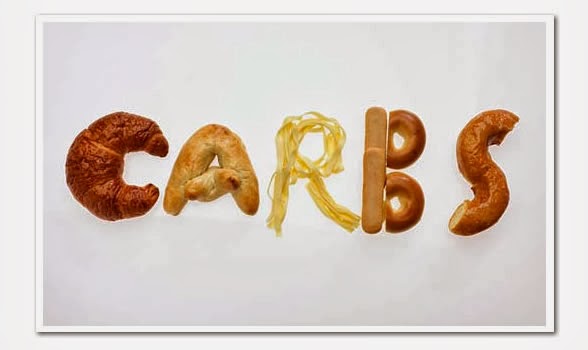
A word about carbs...

If you are a habitual reader of my blog, you will have read an article a couple of weeks ago about how not all calories are the same.  It has now been proven that a high carb diet will lead to weight gain and a whole host of other problems.  It is also the reason why we over eat.  Refined carbohydrates cause your blood glucose levels to shoot up, the body then secretes insulin to bring your glucose level down.  So first you get a high from the glucose levels shooting up and then you get a big LOW thanks to the insulin kicking in.  This makes you eat more.  Yes, it is a fact.  When you hit the low your body craves more refined carbs to get the high back and if you give in to those cravings you will be yo-yoing all day between carb highs and insulin lows.  

What your body really needs is stable blood glucose levels.  The way to achieve this is to eliminate all refined carbohydrates (white bread, white pasta, white rice, industrial foods such as doughnuts, muffins, sugar in all shapes and forms, etc..) and processed foods such as hot dogs, hamburgers, cooked meats, processed cheese like the kind you can buy in a tube.  Stick to real food that you buy and cook from scratch.  Fruit is a great snack or even a handful of nuts as a snack are healthy (just a handful mind, you really don't need to eat a lot to reap the wonderful natural benefits of nuts such as raw almonds!).

I can send you a food combining chart if you would like.  Please ask for it via mail to lucycarr@socialnutrition.com
Social Nutrition:
You can make an appointment to improve your health with Social Nutrition either in person (Madrid) or online (Skype).  Just send an email to lucycarr@socialnutrition.com