Showing posts with label fruits. Show all posts

Thursday, 15 May 2014

The importance of food combining

Food combining has been around for a very long time.  You've probably heard of it, and most people's reaction is; "Oh!  That's so complicated!"  It actually isn't.  Once you get the hang of it, it really is quite simple.  However, in my quest to find authors who explain it without causing mass hysteria I discovered a book called Food Combining Made Easy, by Herbert M. Shelton.

This book was first published in 1940, Herbert Shelton was ahead of his time and pioneered many of the pillars of the modern health food movement, including vegan diets, fasting, raw foodism, and the concept of natural hygiene.  His teachings inspired such followers as Mahatma Gandhi and George Bernard Shaw, along with many famous health food advocates throughout the 20th and 21st Centuries.

Unfortunately I have to admit that I didn't find it as easy as I would have liked.  According to Shelton digestion all comes down to enzymes, he says:
"Each enzyme is specific in its action.  This is to say, it acts only upon one class of food substance.  The enzymes that act upon carbohydrates do not and cannot act upon proteins nor upon salts nor fats.  They are even more specific than this would indicate.  For example, in the digestion of closely related substances, such as the disaccharides (complex sugars), the enzyme that acts upon maltose is not capable of acting upon lactose.  Each sugar seems to require its own specific enzyme."
What this means is that an enzyme that digests carbohydrates, for example, will be paralyzed in an acidic environment.  Acidic environments are necessary for digesting proteins, so, if you eat a hamburger and the bun the mix of protein and carbohydrate means that the carbohydrate or the bun in this case, will stop being digested and left until the protein has been digested.

But he does have some great explanations.  In chapter III of his book he explains - at length - the right and wrong combinations, here is an abbreviation:

  1. Protein - Starch combinations:  Eat protein foods and carbohydrate foods at separate meals.
  2. Protein - protein combinations: Eat but one concentrated protein food at a meal.
  3. Acid - Protein combinations:  Eat proteins and acids at separate meals.  Here acids means acid fruits.  For example, vinegar or other acid used in salads, or added to salad dressing, and eaten with a protein meal, reduce hydrochloric secretion and thus interfere with protein digestion.
  4. Fat - Protein combinations: Eat fats and proteins at separate meals.  Fat inhibits the secretion of gastric juices that digest protein, however, an abundance of green vegetables, especially uncooked ones, counteract the inhibiting effect of fat.
  5. Sugar - Protein combinations: Eat sugars and proteins at separate meals.
  6. Sugar - Starch combinations:  Do not eat sugar with starch... this means no jam, honey, marmalade on your bread/ toast and no breads mixed with fruits.
  7. Melons... always eat alone.
These are the basic rules of food combining.  However, I prefer a more user friendly approach!
Vegetables such as:
Lettuce, celery, endive, chicory, cabbage, cauliflower, broccoli, spinach, chard, cucumber, asparagus, Chinese cabbage, parsley, onions, leeks, garlic, zuccini, escarole, sweet pepper, tomato (although technically a fruit), etc

Proteins such as:
Nuts, peanuts, cheese, meat, fish, eggs, etc

Starches such as:
All cereals, potatoes, legumes, carrots, egg plant, radishes, turnips, peas, etc

Fruits such as:
Orange, grapefruit, pineapple, pomegranate, lemon, apple, grape, peach, plum, cherries, strawberries, pears, apricot, etc

Vegetables can be eaten either with protein or with starches.  But you should NEVER mix starches and proteins.  So no more hamburgers in a bun, or steak and fries, or pasta with a meat or fish sauce.

Fruits and Nuts should be eaten separately and preferably between meals.  This means that fruit or nuts should be eaten either 1 hour before a meal or 2-3 hours after a meal.  Never as a dessert!

On the whole I don't recommend drinking commercially prepared fruit juices.  It is always much better to eat the entire fruit than just have the juice.  If you want juice make it at home and drink it as quickly as possible.  There is a huge juice movement going on in the world right now and I am definitely not against it when carried out properly - juicing is helping thousands of people to lose weight and improve their health, but I insist it should be done correctly.

Food combining is part of the F.I.T Method and I would just like to remind you what the Method can do for you:
  • More energy
  • Better quality of sleep
  • INSTANT WEIGHT LOSS
  • Better digestive function on all levels.
  • Scientific method
  • Immediate guaranteed results
  • Improvement in general health
  • Personalized method


  • I can help you improve your health.  If you would like to make an appointment with me either in person or via Skype, just send me an email to lucycarr@socialnutrition.com

Thursday, 13 June 2013

Grow your own... wherever you live...

It is consistently more and more difficult to find organic vegetables and fruits, readily available and at an affordable price, at least it is in some countries.  Other lucky people like the Americans have Farmer's Markets in most cities, something that should be promoted in all major cities all over the developed world.  Why only the developed world?  Because that is where our diet and our health is suffering in favor of accessibility to all vegetables and fruits all year round instead of just seasonal ones, and mass production to meet demand which means that most of our vegetables and fruits are picked before they are ripe and kept in cold storage until they reach the consumer.  They are treated with unhealthy levels of pesticides so that as much of the crop as possible is viable - all of which enter our bodies when we eat them.  And don't even get me started on GMO produce and the lack of labeling.

Let's face it, nowadays we know very little about what we are putting in our bodies and the potential effects that food can have on our health.  Our busy lifestyles mean that we want convenience above health.

Prices for organic foods are still a lot higher in comparison to the mass produced foods and people are now beginning to try to grow their own.  I have had a vegetable patch for the past 6 years, as an inexperienced gardener I tend to stick to the summer months for growing as I am scared of trying during the winter months for lack of a green house and the fact that where we live, temperatures do go way below freezing in winter.  But this year I have promised myself I am at least going to try and carry on after the summer bonanza of wonderful home grown produce.  I grow: potatoes, lettuces, tomatoes, runner beans, peppers, onions, egg plant, leeks, courgettes (squash), pumpkins, cucumbers, and I am still trying to grow strawberries although the birds usually get to them before I do!

My husband was skeptical the frist year I said I was going to plant a vegetable patch.  He's is not a great
vegetable eater and prefers salads as his main source of vegetables, and will only really eat fruit if it is already cleaned, peeled and cut into bite sizes chunks in a dish and put in front of him.  So, I almost jumped for joy the first time I gave him produce from our garden and he readily admitted that he'd never tasted anything like it.  I made the Spanish version of ratatouille (Pisto), made with courgettes, onions, tomatoes and peppers - he will now eat it happily and can't wait for the vegetables from our garden to be ready to eat - he has even taken on watering the garden in the evenings and is all for starting a project for a green house to extend our own veggie growing all year round.  Now if he can be convinced maybe you can too.

Now, I admit, we are lucky, we have a garden with enough space for a veggie patch and the kids still have loads of space to play without destroying the tomatoes - now if I could just get the dog to stay away... yes, it seems my veggies are so good that even the dog eats them!

Lots of people don't have a garden, and lots of city dwellers don't even have a balcony or terrace that they could use to grow their own veggies - or so they think.  However, you really don't need that much space to have your own little area to grow vegetables.  You would be surprised as to how much produce you can get from a small number of plants.  Quite often I have so much produce that I end up giving it away to friends and neighbors and turning it into tomato sauce and preserving it for the year to come.

One of the major requirements for your vegetables to flourish is sunlight, so as long as you have a sunny room, terrace or balcony you can put them on your are ready to go.  However, in hot countries such as Spain, be careful with the summer heat if your plants are on a cement terrace or balcony it can get too hot for them, so best to have them somewhere you can move them with ease to the shade.  A good idea for this is to put them on a base that has wheels and you can move them easily.  You will need containers of at least 10 inches wide and 12 inches deep - the bigger the pot the better as they need space to grow.  Make sure the containers you use have drainage wholes in the bottom to stop the roots from rotting.  You can also get very creative and make the containers into decorations too.


Tomatoes are ideal for home growing, especially the baby or cherry variety as your will get lots from just a couple of plants, peppers are also good and lettuces just keep producing as long as you cut them
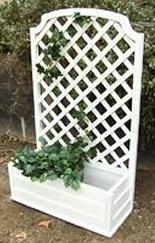
and eat them leaving the roots in the soil.  Courgettes need a lot of space as the plants can grow to be quite big and I wouldn't recommend pumpkins or cucumbers unless you have space to let them crawl... you can train them to grow up and over a trellis and go vertical instead of horizontal to save space.  Lots of people are using hanging baskets to grow vegetables nowadays and therefore economizing on space, believe it or not some can even be grown upside down.  Another way of economizing space is to use walls!  Yes there are even ways to grow veggies on walls - but I would recommend them being outside walls!

So who is going to give it a try?  I'd love to hear about your experience.

Useful Links:

Grow Food not Lawns
Gardening Know How

Social Nutrition:
You can make an appointment to improve your health with Social Nutrition either in person (Madrid) or online (Skype).  Just send an email to lucycarr@socialnutrition.com