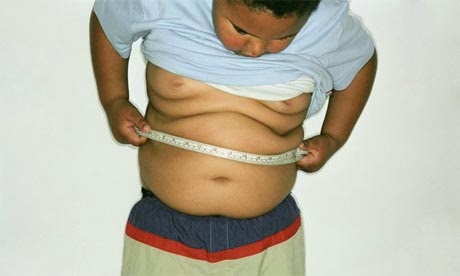
- Childhood obesity has more than doubled in children and quadrupled in adolescents in the past 30 years.
- The percentage of children aged 6-11 years in the USA who were obese increased from 7% in 1980 to nearly 18% in 2012. Similarly, the percentage of adolescents aged 12-19 years who were obese increased from 5% to nearly 21% over the same period.
- In 2012, more than one third of children and adolescents were overweight or obese.
In the UK, the latest figures for 2013/14, show that 19.1% of children aged 10-11 years were obese and a further 14.4% were overweight. Of children aged 4-5 years, 9.5% were obese and another 13.1% were overweight.
Children depend on their parents for their needs. So how conscious are parents about their child's weight? Back in February, 2014, I wrote a post about childhood obesity which discussed the problem that three quarters of parents with overweight children are in denial about their child's weight. Claiming that 77% of parents with overweight children believed that their child's weight was "normal".
Our only hope is that our children realize for themselves that they have a problem. I'd like to share a true story with you about a 12 year old boy who took control of his weight by himself.
Owen Clarke, an English schoolboy was classed as obese at 5ft 4inches (164cm) and weighing in at 10st 8lbs (68.5kg). He says he was embarrassed by his size and when it came to his physical education class at school he said he hated it because he'd get really tired and he "looked like a tomato". He says he wasn't bullied about his weight and no one said anything to him about it, but he couldn't play football with his friends and wanted to change.
 |
| Owen before his diet |
Owen Clarke, an English schoolboy was classed as obese at 5ft 4inches (164cm) and weighing in at 10st 8lbs (68.5kg). He says he was embarrassed by his size and when it came to his physical education class at school he said he hated it because he'd get really tired and he "looked like a tomato". He says he wasn't bullied about his weight and no one said anything to him about it, but he couldn't play football with his friends and wanted to change.
This change happened when his mother decided to go on a diet. She told her family she was going to change the way she ate and Owen asked if he could too.
His mother, Ms Hatfield, said that Owen asking her if he could diet made her feel awful,
"I'd never looked at him and thought he was fat or overweight. He's my son and you just don't look at your child like that."She also said,
"We always ate convenience food because it's so much cheaper. I'd been brought up that way and I've never known anything different."And here are the 2 major problems. Parents don't admit their child has a weight problem and convenience foods are CHEAPER than fresh food and cooking home prepared meals. And that, is the sad truth for many people in many "developed" countries.
It is quicker, easier and cheaper to feed your family junk food. I don't actually believe this to be entirely true.
Owen swapped chocolate and sausage rolls for low fat yoghurts and cucumber and carrot sticks and his mother took responsibility and began preparing home cooked food from scratch.
Owen, in 3 months, has lost an amazing 18kg and now plays football for an hour everyday with his friends. His mother has also lost 16kg in the joint effort with her son.
 |
| Owen after his weight loss |
Owen has transformed his life and was able to realize his weight was stopping him from having a normal childhood. Children need to understand the importance of a healthy diet and parents do too - even more so than their children. The education that parents should be giving their children at home is not English, Maths, Geography or History, but LIFE SKILLS; the knowledge of how to be healthy, how to eat correctly and to look after themselves, now and in the future.
Children who are overweight or obese are more likely to be overweight of obese adults. It's the parents' responsibility to teach them what is right and wrong. So, take a good look at your family, are any of them overweight? Take a good look at the food you give them, do you need to change what you are feeding them?
I would also like to say that governments need to take a look at society and decide if it is right to let junk food be CHEAPER than buying fresh produce. Maybe help from the governments is what the general public needs. From a healthy diet comes healthier people who won't put such a strain on the public health services - it's an all round winner. You need to attack the root of the problem not try to find a way to deal with all the people who are suffering from obesity related illnesses such as Type 2 Diabetes, heart disease and cancer - among others.
Congratulations to Owen Clarke and his mother for changing and embarking on a healthier lifestyle, Owen you are an inspiration, keep up the good work.
I can help you improve your health. If you would like to make an appointment with me either in person or via Skype, just send me an email to lucycarr@socialnutrition.com